Case studies / Trekell Art Supplies

Nine gift rungs. The menu widens at every one.
Trekell runs nine gift campaigns side by side, from $75 to $1,000. Four things to choose from at the bottom, twenty at the top. What a bigger cart buys is a wider choice, not a bigger discount.
Visit trekell.com ↗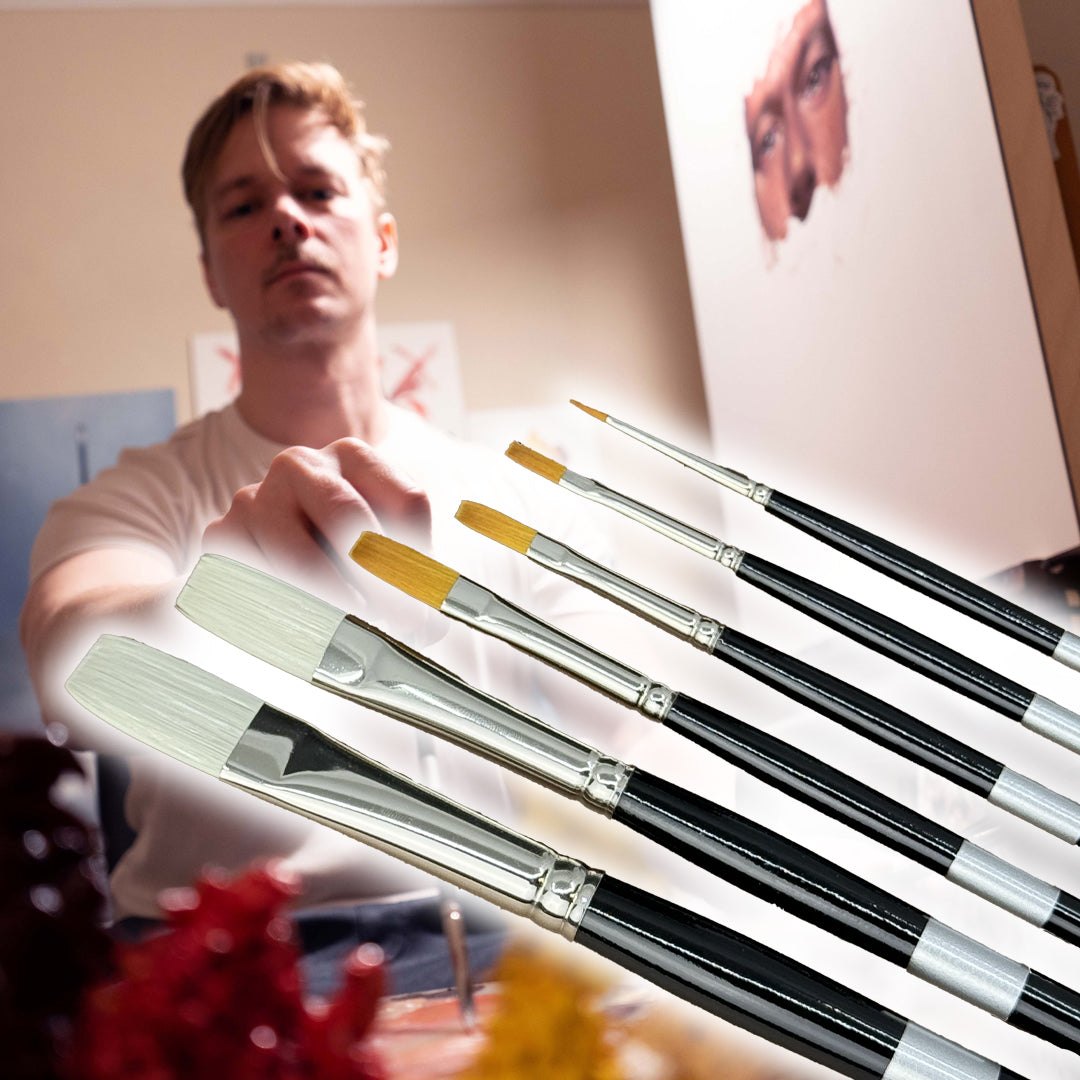
01 / The problem A painter buys the piece, not the shelf
Trekell makes brushes, panels and painting surfaces for working artists. A working artist buys for the canvas in front of them. One panel size, two brush shapes, whatever the piece needs and nothing else.
That is not hesitation, so nothing built to remove hesitation will move it. The cart is not too expensive. It is finished.
What the usual levers do on a store like this
- Price discounts
- A discount makes the same three items cheaper. It gives a painter who already has what they need no reason to carry anything else. AOV.ai analysis
- Loyalty points
- The store already runs a rewards programme. Points pay out on the next order, and the order that could be bigger is this one. trekell.com
- Free shipping
- Shipping is already free from $109.99 on brushes, and from $149.99 once a panel is in the cart. That goal sits between two of the gift rungs, and a shopper who has cleared it has nothing left to reach for. trekell.com
So what makes a painter add one more thing to a cart that is already finished?
02 / The campaign One ladder, nine rungs, and a menu that grows
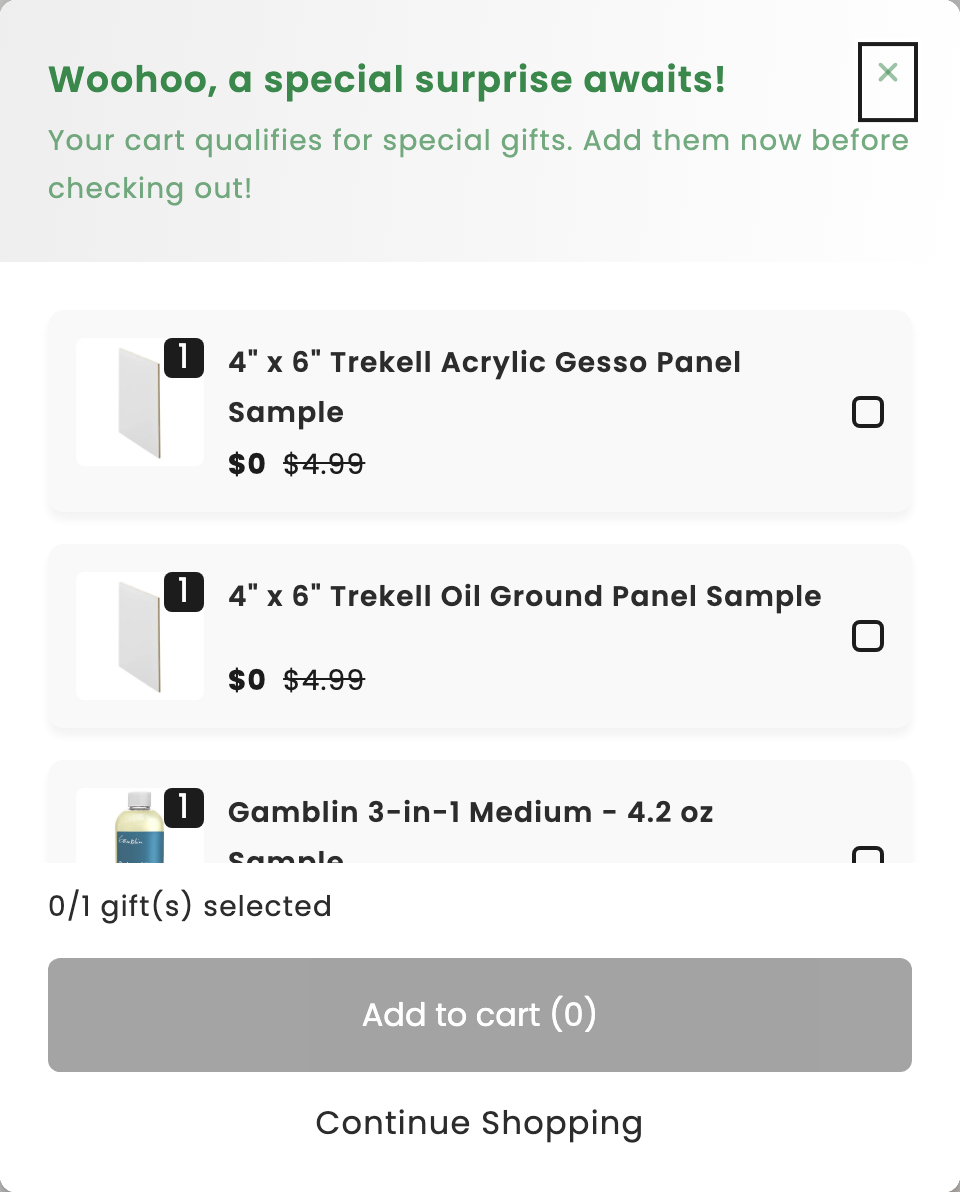
Trekell runs nine Gift with Cart Value campaigns at once. The lowest opens at $75, the highest at $1,000. Cross a rung and a picker opens with that rung's gifts in it, every one at $0.
What changes as the cart climbs is not the gift. It is how many gifts there are to choose between. Four at $75. Eleven at $150. Twenty at $1,000.
The limits are the interesting part. One gift per order, so nine live campaigns never add up to nine free items in one cart. Nothing drops in by itself, so a claim means somebody opened the picker and wanted the thing. No end date on any of the nine, so the ladder is a standing floor rather than a promotion to wait out.
The constraint worth copying is the one on value. The dearest gift at $75 is a $12.99 brush, about seventeen per cent of the rung. At $1,000 it is a $58.29 brush set, under six per cent. The gift does get dearer as you climb, but never as fast as the cart does, and what grows fastest is the number of things to choose between. That is the reason a permanent gift here never turns into a permanent discount.
03 / The outcome Where the climbing actually stops
Orders that claimed a gift across the nine rungs running now.
The nine went up within two hours of each other, and each one publishes to the storefront a running count of the orders that claimed at it. How far shoppers climb is public record.
They replaced a ladder of a different shape. That one opened at $50, carried a rung at $85 and none at $200, and its counters ran past eighteen hundred orders. It also never widened: three gifts at the entry rung, one or two at the top. The fan from four choices up to twenty is the newer idea.
Both ladders answer the same question the same way. The old one put 84.3% of its first eleven hundred orders in its own bottom four, $50 through $125. The new one holds much the same share in its bottom four, $75 through $150. Different entry rung, different rungs above it, two counters that never shared a number, and the same answer to within a fifth of a point. The top three rungs, $500 and above, have six orders between them.
There is a shape in that, and it is easy to read too much into it. A counter cannot tell you what a single change did, and it is not a flattering number here: by this point in its life the ladder it replaced was past eleven hundred orders, against fewer than 400 on this one. The old entry rung was $50 rather than $75, so more carts cleared it, and nothing in a counter accounts for traffic, season or the other promotions running beside it. Read it as evidence the offer gets used, and read the distribution rather than the total.
The number usually attached to Trekell is 38 per cent on average order value within three months, published by AOV.ai. It was measuring the first ladder, the one that opened at $50 with three gifts to choose from. It is an internal figure, nobody at Trekell is quoted against it, and the storefront carries several other promotion apps besides this one.
04 / What this case shows Build the bottom of the ladder first
The rungs that do the work sit just above where an order already lands. On the ladder running now, the four rungs from $75 to $150 carry more than four in five of every order that claimed a gift, and the ladder before it put the same share in its own bottom four. A ladder built mainly of high thresholds is mostly decoration.
Then pay for the climb in choice rather than in money. A gift worth seventeen per cent of a $75 cart and under six per cent of a $1,000 one is not a discount schedule, it is a menu that grows. Nobody learns to wait for a menu.
Two questions before you copy any of it. What does a normal order on your store come to, and what sits twenty dollars above that? And which of your products would a customer be curious about but never put in a basket on purpose? The first sets the entry rung. The second fills the picker.
It is a poor fit in two cases. If your catalogue is small you cannot widen a menu, and the ladder collapses into a discount schedule with extra steps. And the menu is only as wide as the stock behind it: at the $100 rung, the one the most orders land on, one of the six gifts is sold out.