Case studies / Dermalogica
Give away stock, not margin.
Dermalogica Australia hands out kits, minis and a sample the shopper picks. Several campaigns run side by side, and every gift is its own product with a unit count behind it.
Visit dermalogica.com.au ↗
01 / The problem The second product is the hard one
A 15ml eye serum on dermalogica.com.au is A$216. At that price a cart is not short of money. It is short of a reason to hold a second thing.
Skincare makes that worse. No product page tells a shopper whether a serum suits their skin, and the answer takes a month of use. The second item is a bet.
What the other levers do here
- Cut the price
- A discount scales with the basket. The Stressed Skin Rescue Duo lists at A$48, which is 16 per cent of a A$300 order and a smaller slice of a bigger one. A percentage works the other way. dermalogica.com.au
- Free delivery
- Delivery is free from A$50 and express from A$150. The thresholds that ask for a bigger basket, A$220 and A$250, sit above both, so a cart on its way to one of those gifts has already cleared the shipping bar. dermalogica.com.au
- Recommend one more product
- A recommendation says what else exists. It does not say whether the thing suits your skin, which is the question keeping the second item out. AOV.ai analysis
So what goes into the cart that a price cut cannot put there?
02 / The campaign Gifts built as their own products
Three kits went out as gifts, and each was built as a product of its own rather than a discount on something already for sale. Two of them are still on dermalogica.com.au as gift with purchase SKUs. AOV.ai's earlier write up on this store put the three cart thresholds at A$200, A$250 and A$300.
The limits are where the thinking went. A gift that is its own SKU carries a unit count, and the unit count is the budget. The store could work the cost out before the campaign opened instead of watching it grow with every order.
The store still runs gifts that way. Behind the campaigns live now sit 300 units of the A$220 gift, 150 of the Clear Start gift and 206 of the 5ml serum, each set to refuse once it is gone.
The rungs sit A$50 apart. Close enough that the next kit is one product away, far enough that reaching it means adding a real product.
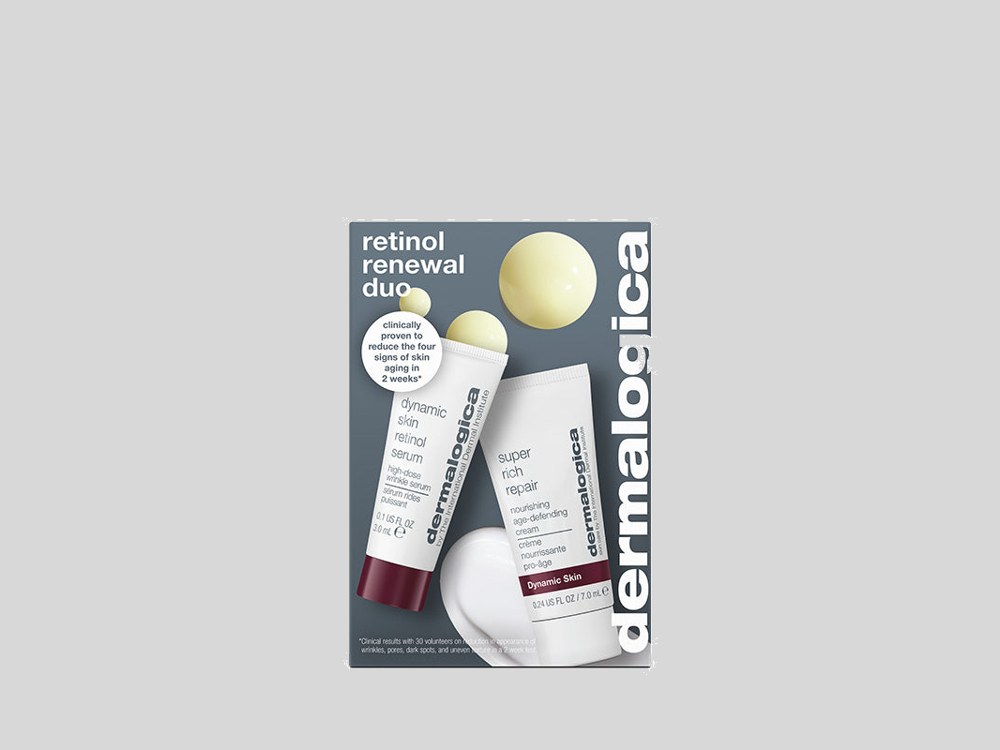 Tier 2 · Retinol Renewal Duo
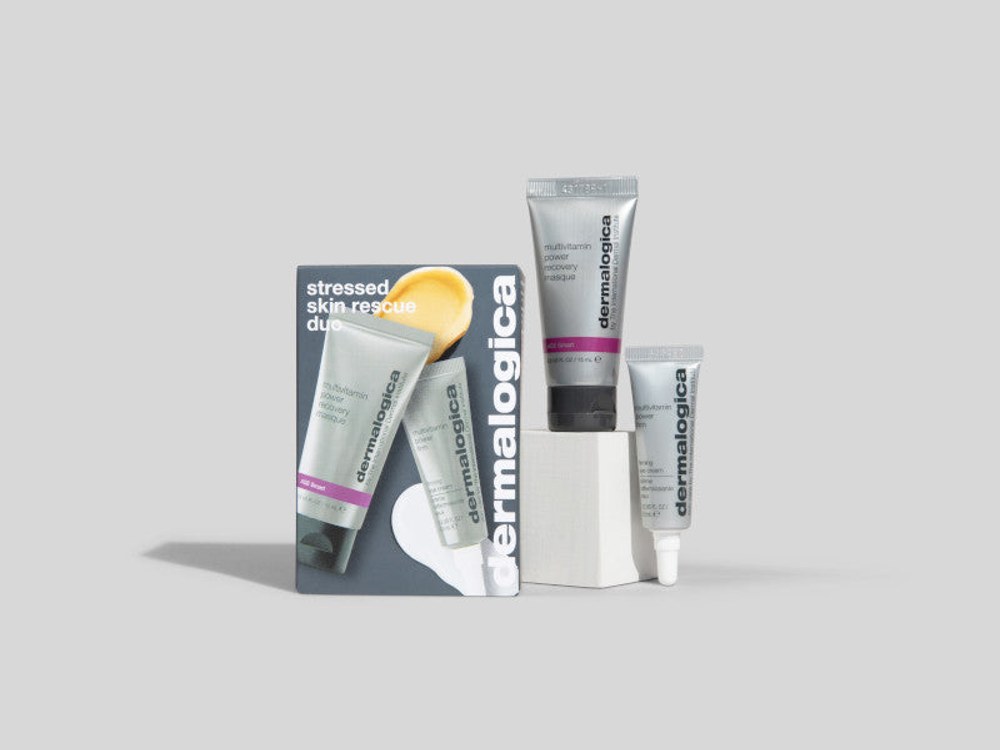 Tier 3 · Stressed Skin Rescue Duo
03 / The outcome What the counters prove, and what they do not
Orders that took the free sample, the biggest of the campaigns running now.
The kit ladder is not one of those. It is gone from the store, and the Stressed Skin Rescue Duo now shows as out of stock.
Five campaigns run side by side now, each pointed at a different cart: any order at all, a A$75 threshold on the Clear Start gift, a A$220 threshold, the eye serum, and a gift that only opens through a shared link.
The volume is nowhere near even. The sample picker has more than 2,900 orders against it and asks the least, any order over A$1. The A$220 gift has more than 500, the Clear Start gift and the eye serum around 200 each, and the link-only gift a dozen.
One offer carries more orders than the other five put together, and it is the one that asks least and gives least.
The cheapest offer is doing most of the work. That is worth more than the ratio, because the counters started on different days and cannot be raced against each other.
A claim counter is not a measurement, and it is worth saying why. Two of them are closed to an audience you cannot join, they started at different times, and none of them tells you what the cart would have done without the gift. Read a rising counter as evidence the offer works, not as a measurement of the threshold.
The figure usually quoted for Dermalogica is average order value up 32.68 per cent over three months. It comes from AOV.ai's own write up, nobody at Dermalogica is quoted against it, and the store has run gift campaigns of several different shapes. It was not one ladder.
04 / What this case shows Every gift here has a stock number against it
The repeatable part is not the kits. Every gift on this store is its own SKU, held out of the catalogue, with a unit count attached and stock tracking set to refuse once it runs out. A discount scales with the order and never stops. Three hundred units stop at three hundred units, and one of the kits is already showing as out of stock.
One campaign is not a plan either. Five run here at once: every order, a low threshold, a higher one, a single product, and a link handed out on its own. Together they mean almost every cart has something in reach.
Two questions before you copy it. Which product would a shopper try but not buy? How many units of it can you give away in a month without feeling it? The first picks the gift, the second sets the budget.
It fits badly in two cases. If the gift is something you also sell at full price in the same size, a standing campaign teaches people to wait. And if you cannot make a giveaway version, you are handing over sellable stock at cost.